
It accounts for the wear and tear, obsolescence, or other factors that reduce an asset’s value over time. This process ensures that the expense recognition aligns with the revenue generated from the asset’s use, adhering to the matching principle in accounting. In this blog, we are going to talk about the accounting entry for depreciation, how to calculate depreciation expense, and how to record a depreciation journal entry. It also corrects the income statement since it reflects the cost of the asset’s service.
- The purpose of the journal entry for depreciation is to achieve the matching principle.
- Market value is the actual value of an asset if it were sold on the open market.
- Different depreciation methods exist to meet the diverse operational patterns of assets.
- In this method, more depreciation is recorded in the early years of the asset’s life and less in the later years.
- The purpose of depreciation is to reflect the gradual loss of value of these assets over time due to wear and tear, obsolescence, and other factors.
- This entry of depreciation updates both the ledgers and reports accurately on tally.
Detailed Quickbooks Self Employed Accounting Software Guide
By continuing this process, https://www.bookstime.com/ the accumulated depreciation at the end of year 5 is $49,000. Therefore, the net book value at the end of year 5 is $1,000 which is the estimated scrap value. From the example, the total cost of the machinery is $50,000, the scrap value is $1,000 and the useful life is 5 years. Let’s assume that ABC Co bought machinery for its manufacturing production of $50,000.
- This comprehensive program offers over 16 hours of expert-led video tutorials, guiding you through the preparation and analysis of income statements, balance sheets, and cash flow statements.
- Now that we know the process, let’s review examples of depreciation journal entries.
- The accumulated depreciation or amortization account represents the total amount of depreciation or amortization that has been charged to the asset over its useful life.
- It is important to realize that the disposal of fixed assets account is an income statement account.
- The owner of the company estimates that the useful life of this oven is about ten years, and probably it won’t be worth anything after those ten years.
- The total depreciation expense that has been recorded for an asset since it was acquired.
Examples of Depreciation Journal Entries

Now that you understand the journalizing of depreciation, we’ll next turn to look at the relationship between accumulated depreciation and depreciation expense. Fixed asset accounting software can make it easier with automated depreciation schedules. Payroll Taxes NetAsset empowers accountants with the tools they need to streamline workflows so they can focus on strategic initiatives.

Depreciation of Fixed Assets Journal Entry
There are different methods of depreciation, and the method used depends on the type of asset and the company’s accounting policy. In this section, we will discuss the depreciation of specific assets. Depreciation is a crucial factor in determining the journal entry for depreciation taxable income of a business.

Importance of Recording Depreciation

That is why capital assets must be capitalized and depreciated on a systematic and consistent basis. Unlike journal entries for normal business transactions, the deprecation journal entry does not actually record a business event. Now you’re ready to record the depreciation journal entries for the period. This post will delve into the specifics of depreciation expense journal entries, where and how to record them, and how they impact financial statements. Now let’s see how to calculate the depreciation expense for each of the depreciation methods.
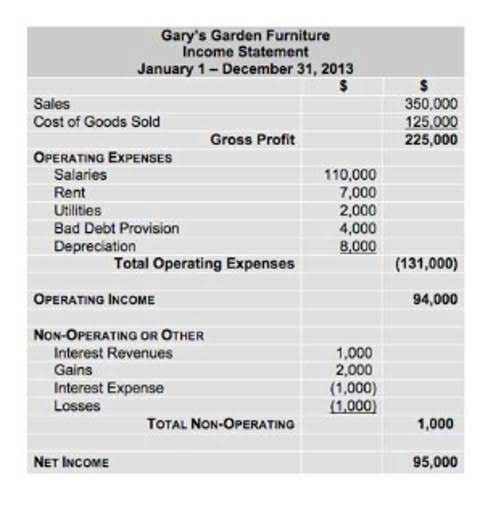
The Internal Revenue Service (IRS) requires businesses to report depreciation expenses on their tax returns. The depreciation method used for tax purposes must be consistent with the method used for financial reporting purposes. The generally accepted accounting principles (GAAP) require that companies use a consistent and appropriate method to calculate depreciation. This ensures that the financial statements accurately reflect the value of the assets and the performance of the company.
- Since the depreciation journal entry is a fundamental concept in financial accounting.
- Where, Salvage Value is the estimated value of the asset at the end of its useful life.
- For tangible assets, such as machinery, equipment, and vehicles, the depreciation expense is calculated based on the cost of the asset, its estimated useful life, and its salvage value.
- This method is not preferred by the International Accounting Standards.
- Operating assets are those used in the daily functioning of a business and its generation of revenue, such as cash or machinery and equipment.
- The concept of depreciation is to spread the cost of assets over their useful life.
- Let’s look at the different methods of calculating depreciation and how they impact your journal entries.
Therefore, the $1,500 adjusting entry should be made to rectify the amount of accumulated depreciation account. In other words, the depreciated amount in the formula above is the beginning balance of the accumulated depreciation on the balance sheet of the company. To calculate depreciation using the straight-line method, you divide the cost of the asset by its useful life.
Understanding these entries is tricky for everyone at the start, but once you understand financial statement dynamics, it’s easier. Let’s look at how these entries appear on the financial statements and add some commentary. The sales cycle shows — you guessed it — how sales are made in a company. In the final part of the question the business sells the asset for 4,500. Since the asset had a net book value of 3,000 the profit on disposal is calculated as follows.